Eupomatia laurina (Bolwarra tree)
Links:
https://gardeningwithangus.com.au/eupomatia-laurina-bolwarra/
Google search: https://www.google.com/search?q=Eupomatia+laurina+%E2%80%93+Bolwarra

Eupomatia laurina (Bolwarra tree)
Links:
https://gardeningwithangus.com.au/eupomatia-laurina-bolwarra/
Google search: https://www.google.com/search?q=Eupomatia+laurina+%E2%80%93+Bolwarra
A very productive working bee today. It felt like I got three times as much done than usual…. maybe because there were three times more people than usual?
Fred and Sandra Anderson joined the group on Sunday for a spot of lantana bashing. I had a clear idea of the area I wanted to work on but we had to get there first. So the direct track down to site A got a little work:

There are some used railway ties near this location. If I can cut them down to size somewhat, I might be able to make decent stairs over the slippery parts.
We made our way down the cleared lane-way at the rear of the reserve to get to the large patch of lantana between the ol’ fallen fig tree and the creek. Before we reach this location, we need to penetrate the wall of privet that lines the lane-way.

At this location, there is at least 100m2 of this:

I had previously cleared most of this location but then left it alone for far too long. While it is once again dominating the scene, it still has not gotten to the point it was at before I first cleared it. It’s younger and easier to pull up. Still a job though…
Here and there were a few plants that had obviously taken root when the lantana was previously pushed back. For example, this tree fern:

Hopefully the shock of all the extra light won’t be too much for it.
Another interesting find was this bower bird nest:

I had only cleared this area a few weeks back so I know it is new but no obvious decorations yet. I hope we did not disturb it too much…
After a few hours, I believe we had cleared a solid third of the field of lantana.

We left it at that but with Saturday’s weather forecast looking good, I should be able to push on further at this location on the next working bee.
I saw a bigger water dragon chase down and bite onto a smaller dragon. There had been the head bobbing and hand waving actions they do before fighting so I originally thought this was a bigger dragon picking on a smaller dragon but after watching the film, I now think it is a male holding onto a female. They seemed to separate amicably after this interaction.
The smaller dragon did not race off afterwards either. They seemed to have arrived at some sort of arrangement.
Today’s working bee was all about preparation for the new plants we will be picking up in the coming week (plant list).
At the top level, the grass stops most other plants from spreading or getting going. So that appears to be the best location for the smaller plants such as grasses and ground cover. I pulled out grass from various spots to make way:

I had planned on planting some of the trees at the rear section of the reserve so I headed there to find suitable spots. On my way to the desired spot, I walked down my old route which was informative. I had cleared this area previously and various trees took the opportunity to grow but lantana was once again reclaiming the area.
I remember saving a Clerodendrum tree in this area. At the time it was bent right over due to the weight of the lantana. Now it is prospering:

In front of it is also a poison peach tree which started growing not long after I cleared the area.
I took some film at this location as well…
After this spot, it got much worse. I was shocked by the condition of the bush. Lantana is back in a big way. I struggled to make my way through so I forgot about taking some photos. Along the creek, palm grass has also taken off.
There were some positives. Lots of sandpaper figs and other desirable plants but it is all under threat by lantana at present.
I will not be able to plant the trees in that location next weekend. I will have to keep some of the new trees in their pots until I can improve the condition of the area. It is going to take some time…
I’ve just been informed that the Lake Macquarie landcare nursery has 40 or so plants that would be suitable for the Dick’s creek site.
Now I just need to find suitable locations…
Edit, they were:
5 x Acacia implexa
5 x Acacia ulicifolia
2 x Acmena smithii
3 x Syncarpia glomulifera
5 x Dodonaea triquetra
1 x Hibbertia scandens
5 x viola hederacea
5 x Dichondra repens
3 x Dianella caerulea
2 x Lomandra longifolia
4 x Gonocarpus teucrioides
I was in the mood to tackle some lantana today but as always, priorities changed. As I walked past ‘site A’ I was disturbed by the density of privet. Lantana contributes but it is the privet that has taken hold at this location. I had previously cleared this area and for this reason, there is numerous young natives popping up. Sandpaper fig, bleeding heart, pittosporum and others are there but their life is hard when they are amongst this:

So I started removing the privet with the weed puller which I had luckily brought with me. While the privet is a big problem, I found it easier to deal with than in the past because most of it was still young and had not fully established itself. Another twelve months and it will be notably harder, I believe.
This is the first patch I cleared:


After lunch I moved along the track and tackled any privet I noticed. I finally got to the bank on the south side of Second fall… it was mostly just small privet.

Past ‘Site A’, I found some natives amongst the fishbone fern so it was worth while to deal with that directly.

I decided it would be more efficient to move downhill and clear the privet from underneath. However, I found the ol’ fallen sandpaper fig to still be being harassed by privet and lantana so I spent the rest of the day at that spot. There is three or four poison peach trees in that location as well so I did my best to help those out.

One of the poison peach trees is a good five meters tall now.

There is still more to do for the ol’ fallen sandpaper tree. I think I will start here next week.
I have been unhappy to see the sydney golden wattles (acacia longifolia), planted back in 2019, die before their usual life expectancy. Luckily, the Lakemac landcare hub had some spare Sydney Golden Wattles so I am giving them another go.
I was given five to replace the four I planted last time.

 I knew these trees were short lived but I was expecting they would produce new growth in the area before they died. That hasn’t really happened. Maybe because the surrounding grass is always too long. So, I intend on removing the surrounding grass and allowing ground cover to get established.
I think most of the native fauna will be happy with these steps except maybe this guy:

This guy appeared very confused by the loss of grass. I found him crawling up my leg. It’s camouflage would of ensured I didn’t see it if it hadn’t made itself known.
Next step is to get some covers around these young acacias and then dig out some of the grass.
Description: Perennial herb, not or hardly clumped; rhizome creeping.
Found on track between Second fall and Site A.

With the weekend filling up, I only had a few hours for this week’s working bee. I had grandiose plans of clearing the track upto Site A and then doing most of Site A but that was just dreaming I had realised after an hour or so. Still I was happy to give some native plants some clearance from the fishbone fern.
I spent some time again on the track coming up from Second fall. It is a mess but if I remember back to what I started with, I can be happy at how its going. Whenever some space is made in the fishbone fern, the natives use the opportunity to get started.
Before I started…

After pushing back the fishbone fern

The smaller sandpaper figs should get a boost from this. There was also some other species of trees which I believe are native but I am yet to identify them with certainty.
This amount of clearing took about an hour to do. At that pace I should be able to get a sizable chunk of Site A done if I can get a 3-4 hr session done.
Another productive working bee today. It’s been great to do bush regeneration lately. The ground gets regular soakings which makes removing plants like fishbone fern far easier and more effective as more of the roots are pulled up with the plant.
My focus is still on getting the tracks in better shape.
|
|
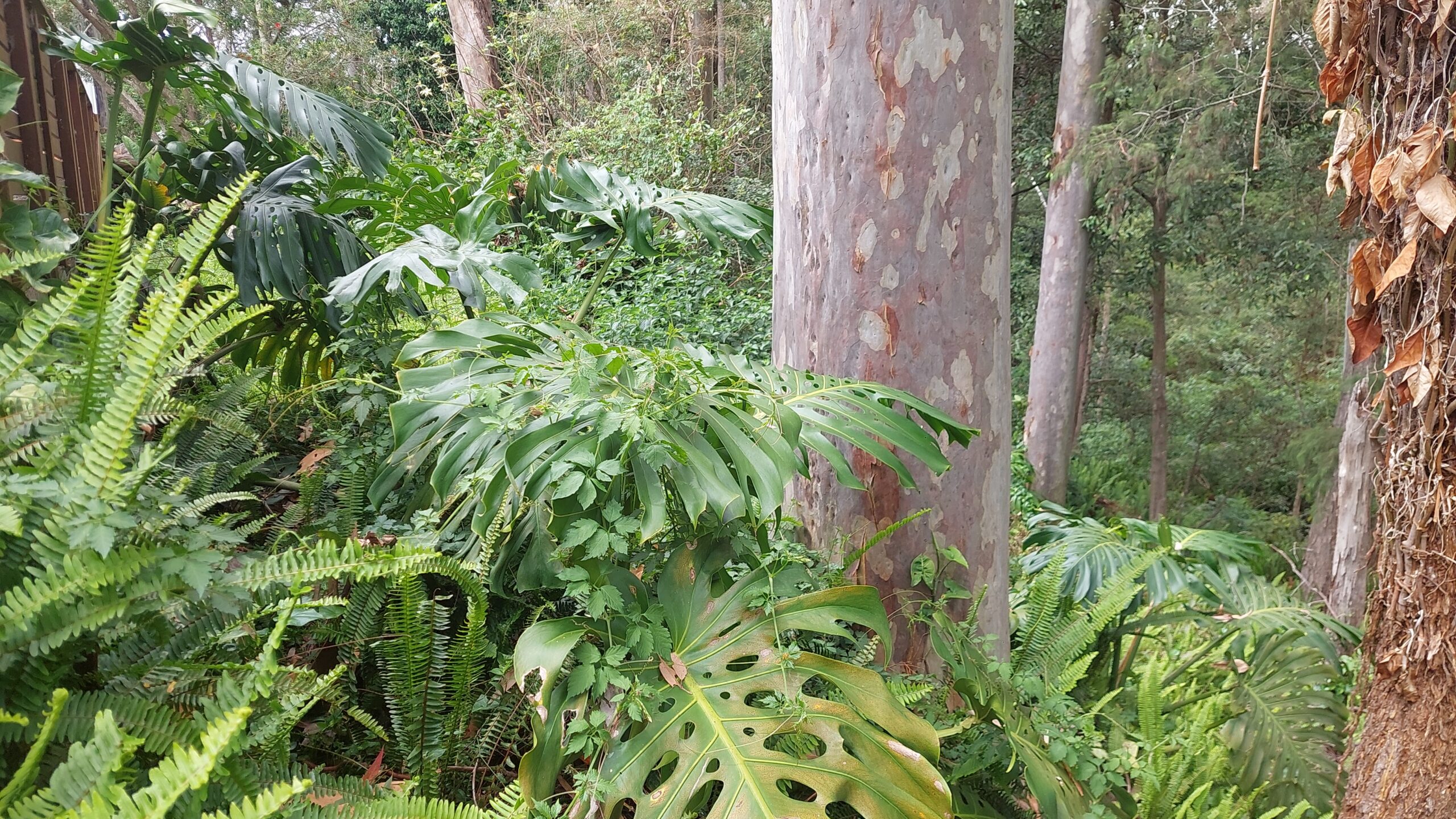
I started once again with the start of the track where the monstera has dominated for decades. I typically ignore this location but monstera is undeniably spreading and so needed some attention. |
 |
I have been clearing a bit of monstera and other exotics from this area each week. I don’t clear it completely as there are water dragons and land mullets that live in this area and I would not be surprised if they use the monstera as cover.
Monstera is relatively easy to control so it is still a low priority for now. |
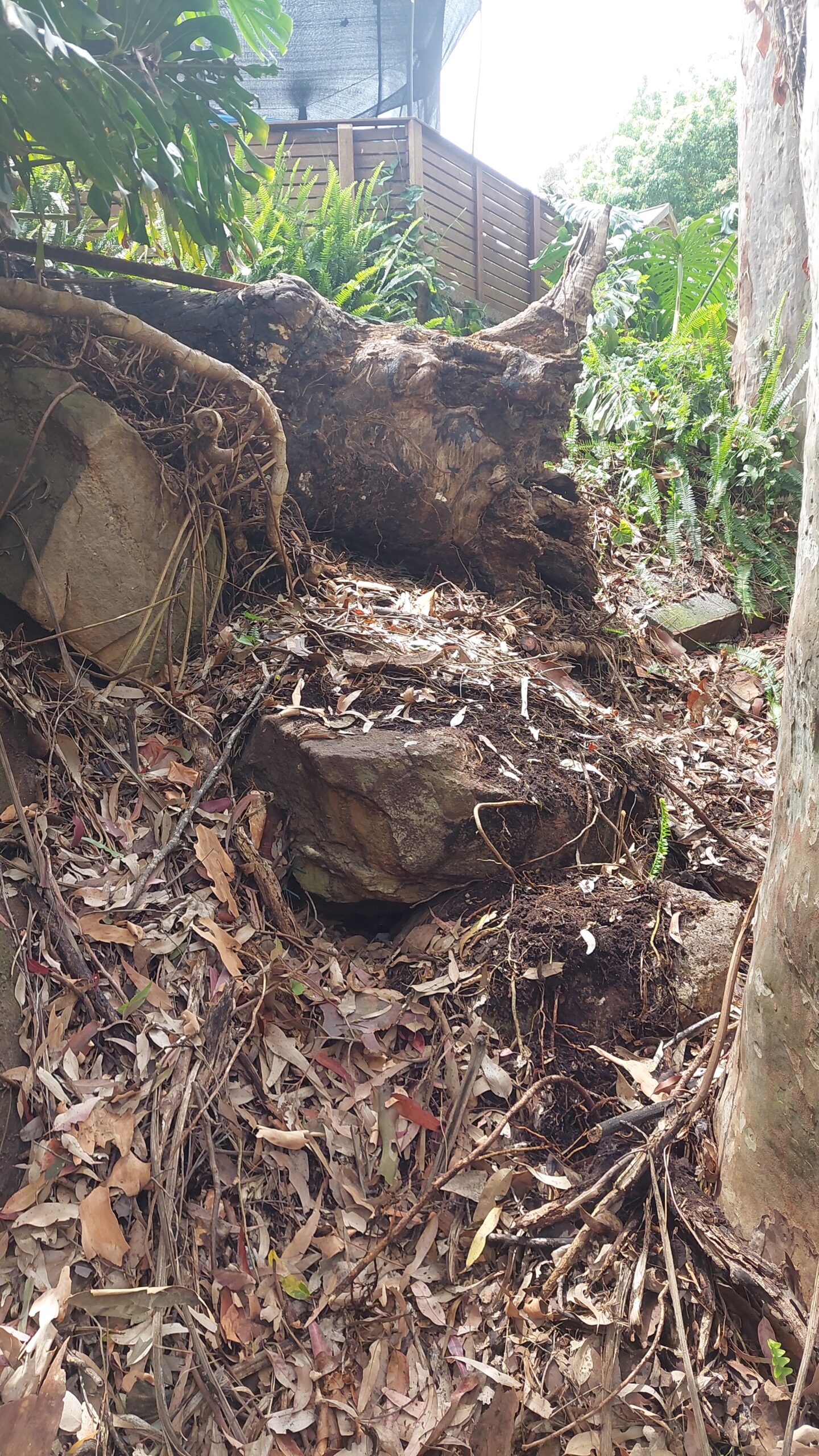
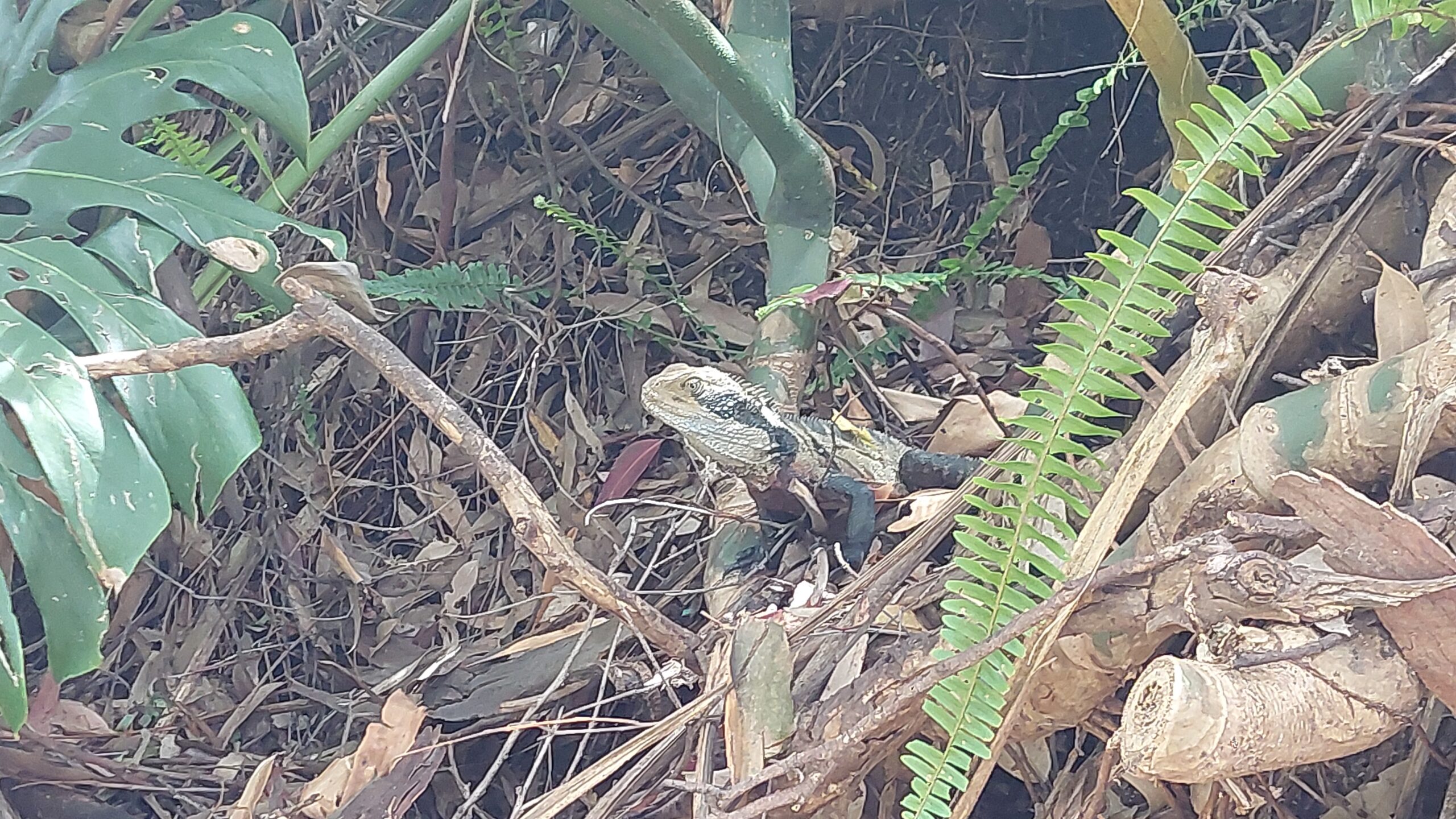
This guy loves to wait until I am right beside it before it takes off in a rush. Gets me almost every time! It was worst today as he was on a rock at eye level as I was moving past.
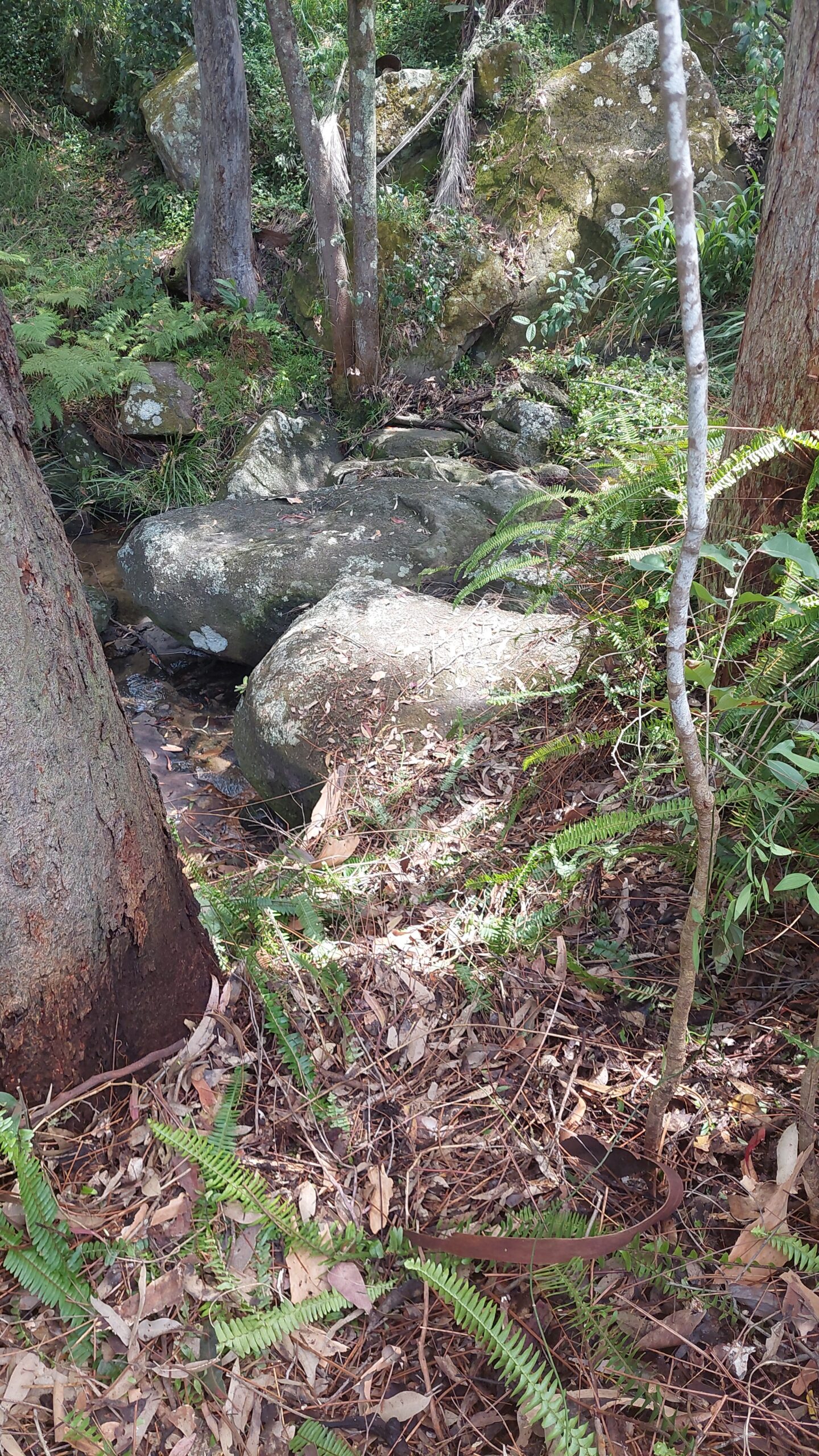
My daughter and I wanted to explore the ground under a nearby currawong nest as I had seen a Channel billed cuckoo near the nest and I was wondering if the currawong’s egg had been evicted. Unfortunately, the area under the nest was just too messy and boggy to search. On the way there and back though, I noticed more Gahnia and young pittosporums struggling against the fishbone fern. Hence, that turned into the next spot to work on. The image below shows my efforts.
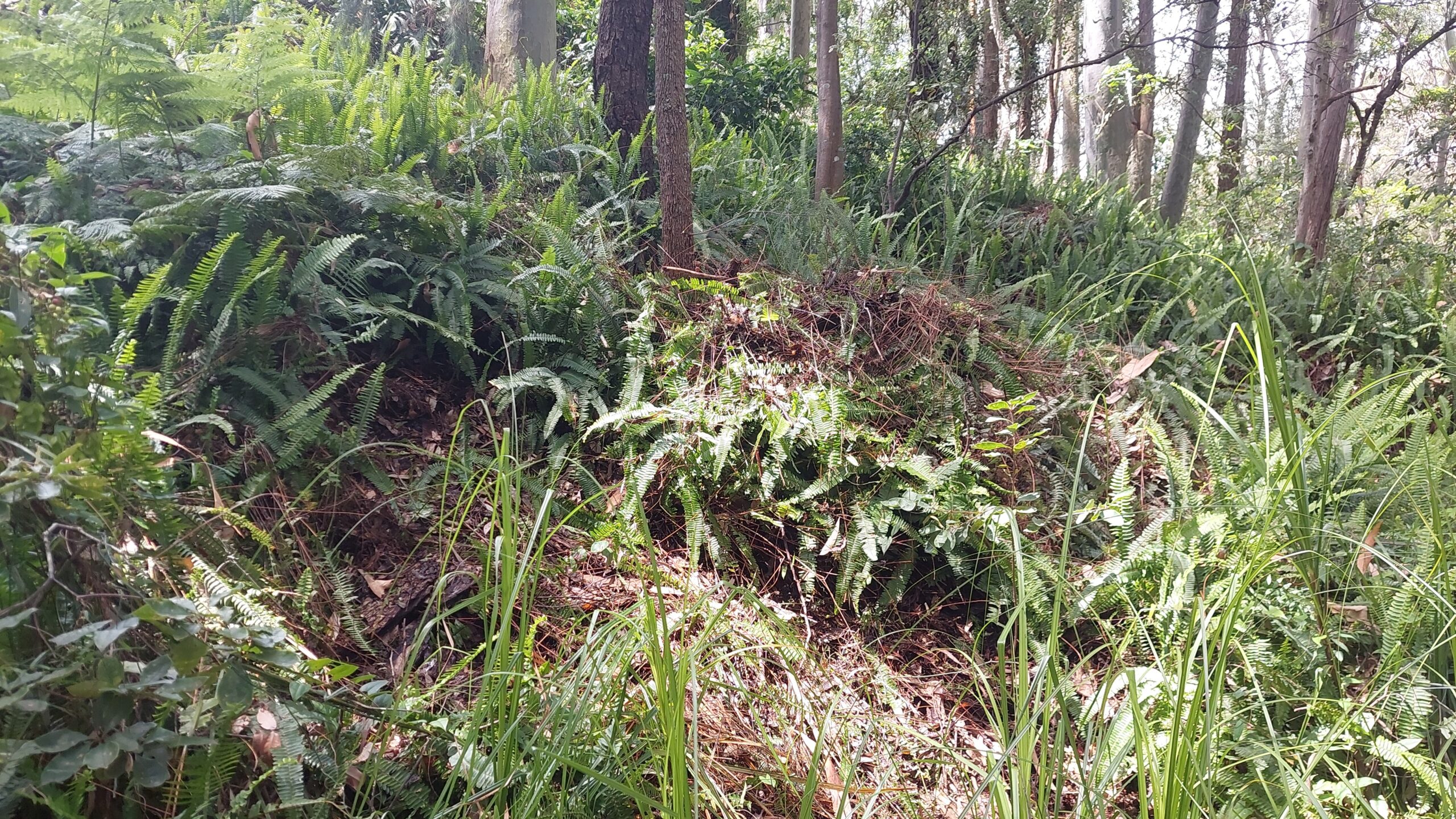
This ‘track’ down the hill leads to the Gahnia. I want to avoid this situation as it is not obvious how people would walk through that Gahnia without causing too much damage.
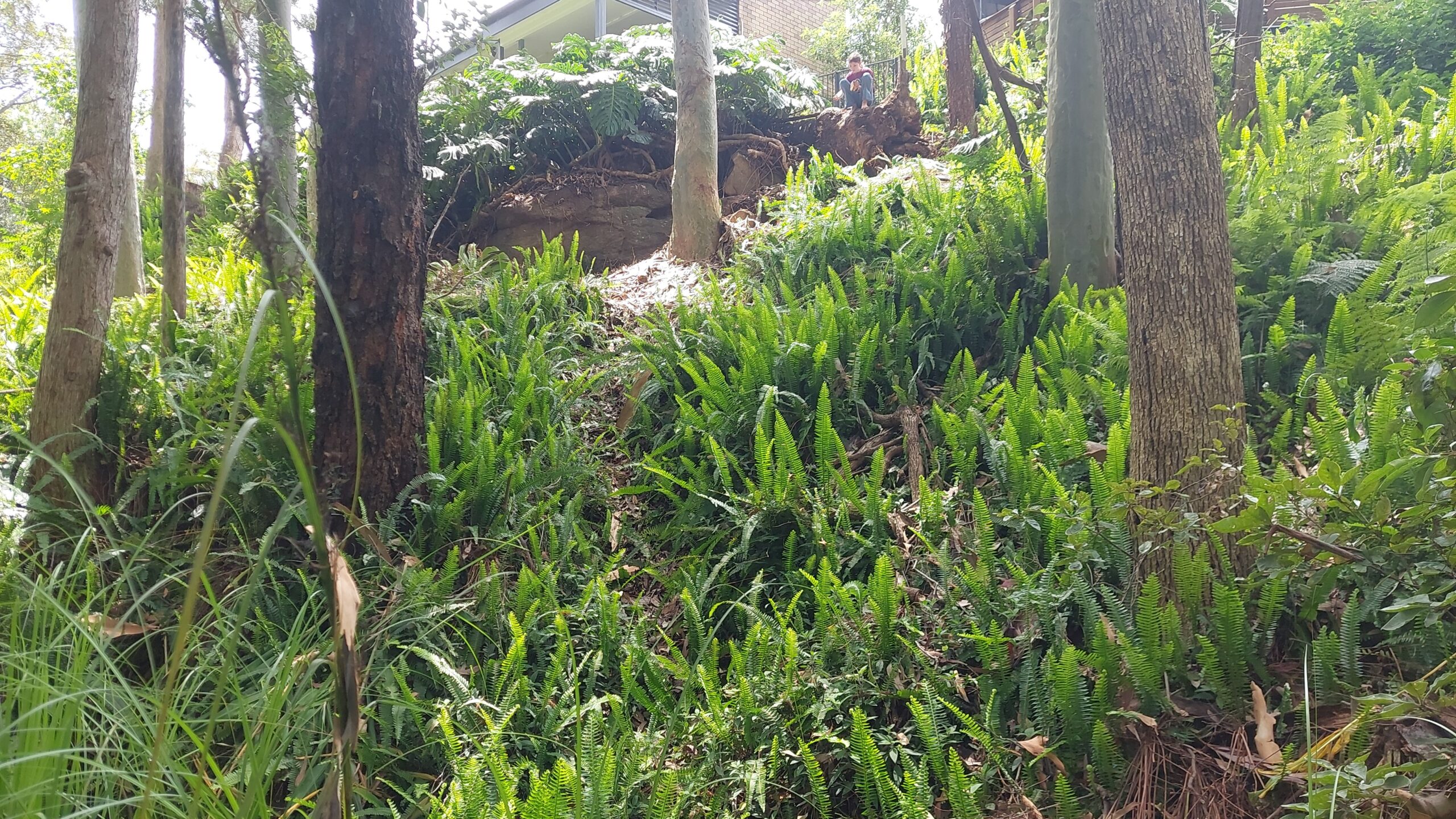
So, to avoid this issue, I cleared the fishbone fern from between trees before the Gahnia. Now people will be able to walk onto the rocks at that level and will be able to cross the creek easily.
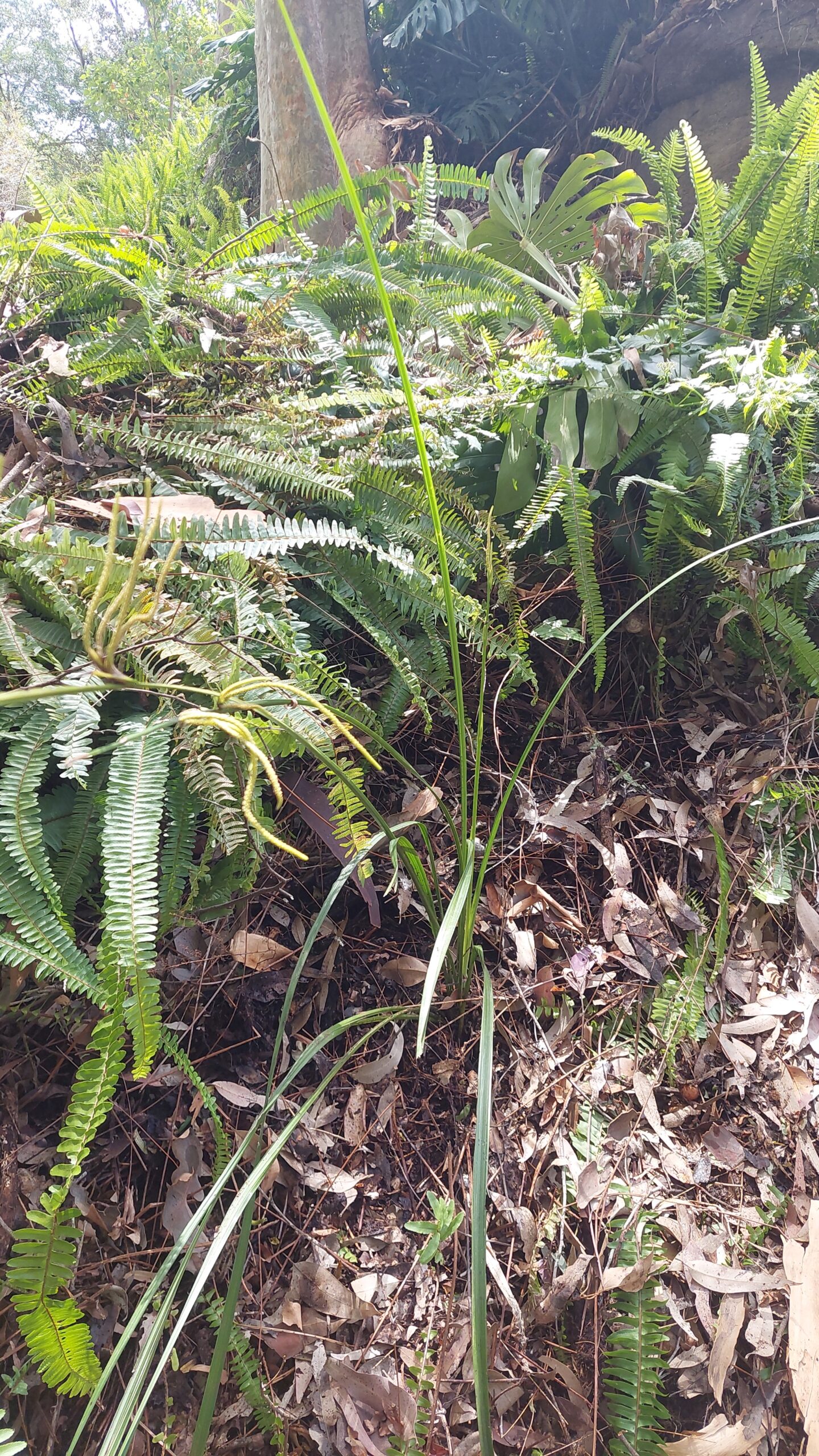
Doing this lead me to discover a new instance of a native grass (name?) I have seen near Second fall. I cleared around that, around the swamp lilly I found last week and around the native olive tree at the same location.
 |
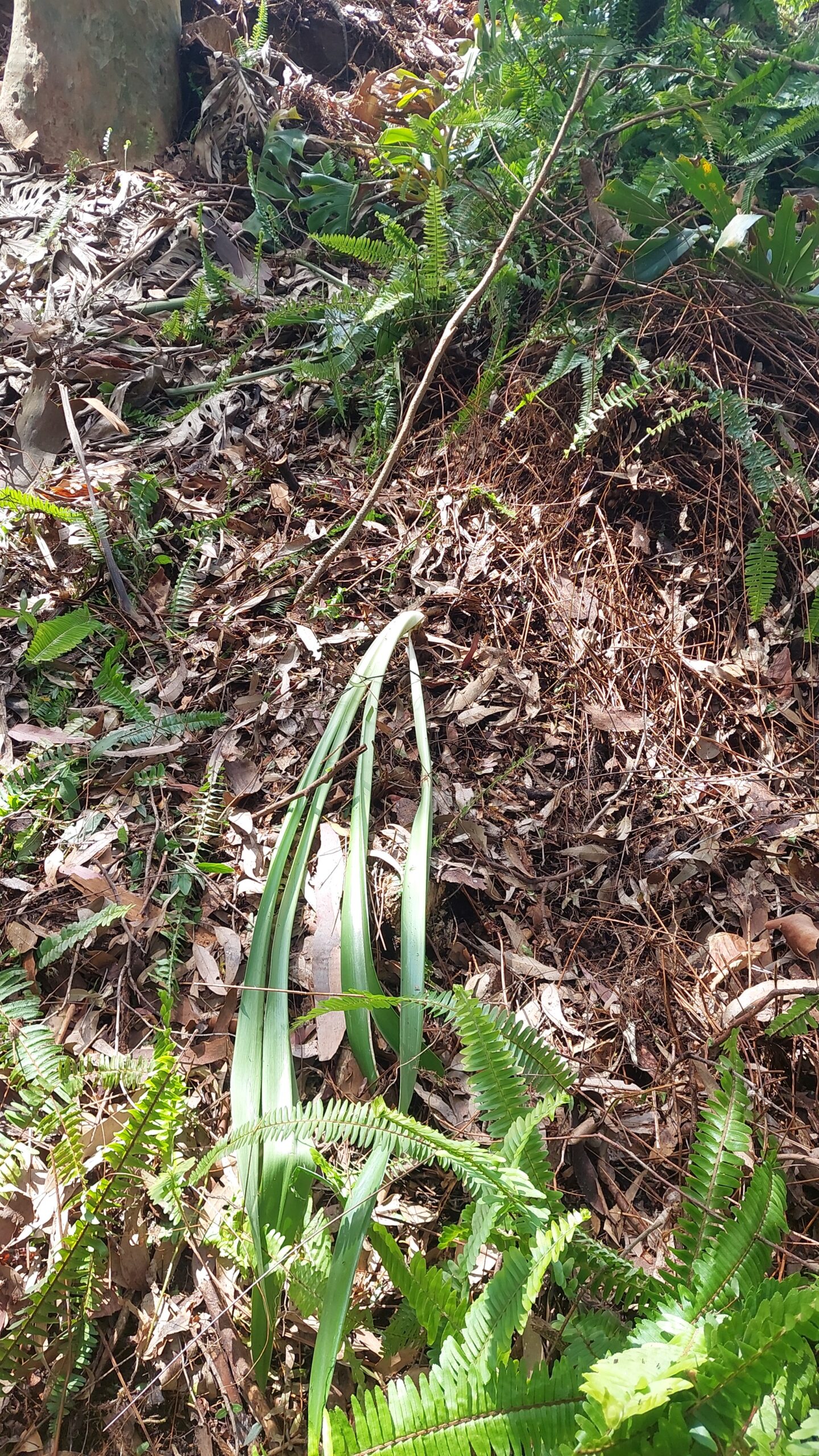 |
I was then able to use my newly created track to find my way down to Second fall and up the track towards Site A where I found more natives that needed freeing from fishbone fern. This is the track at present:
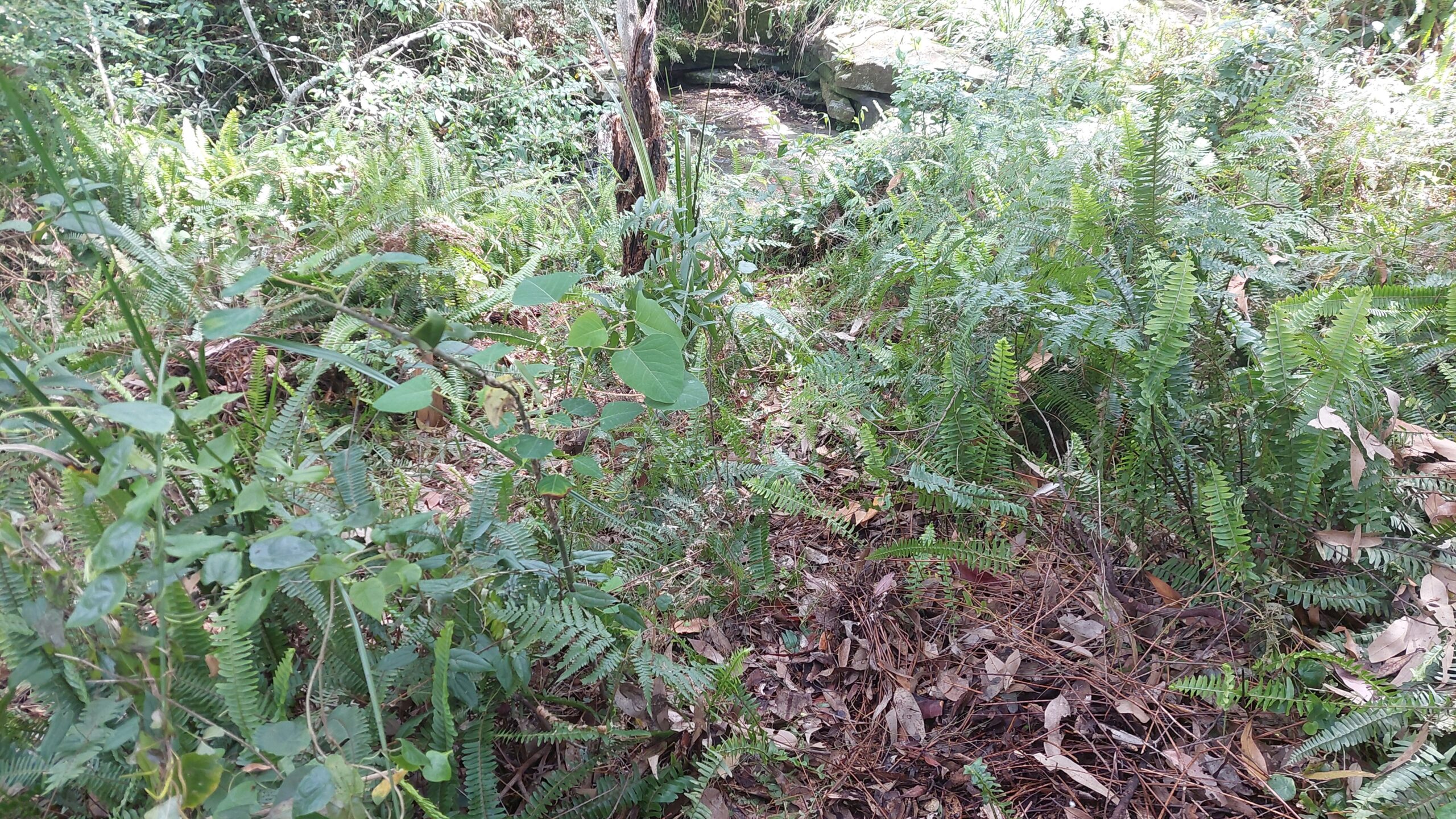
I was out of gas at this point but there is quite a bit to do at this location.This image shows (not clearly) many small sandpaper figs and a Clerodendrum that are struggling against the fishbone fern. This will be a priority for upcoming working bees.
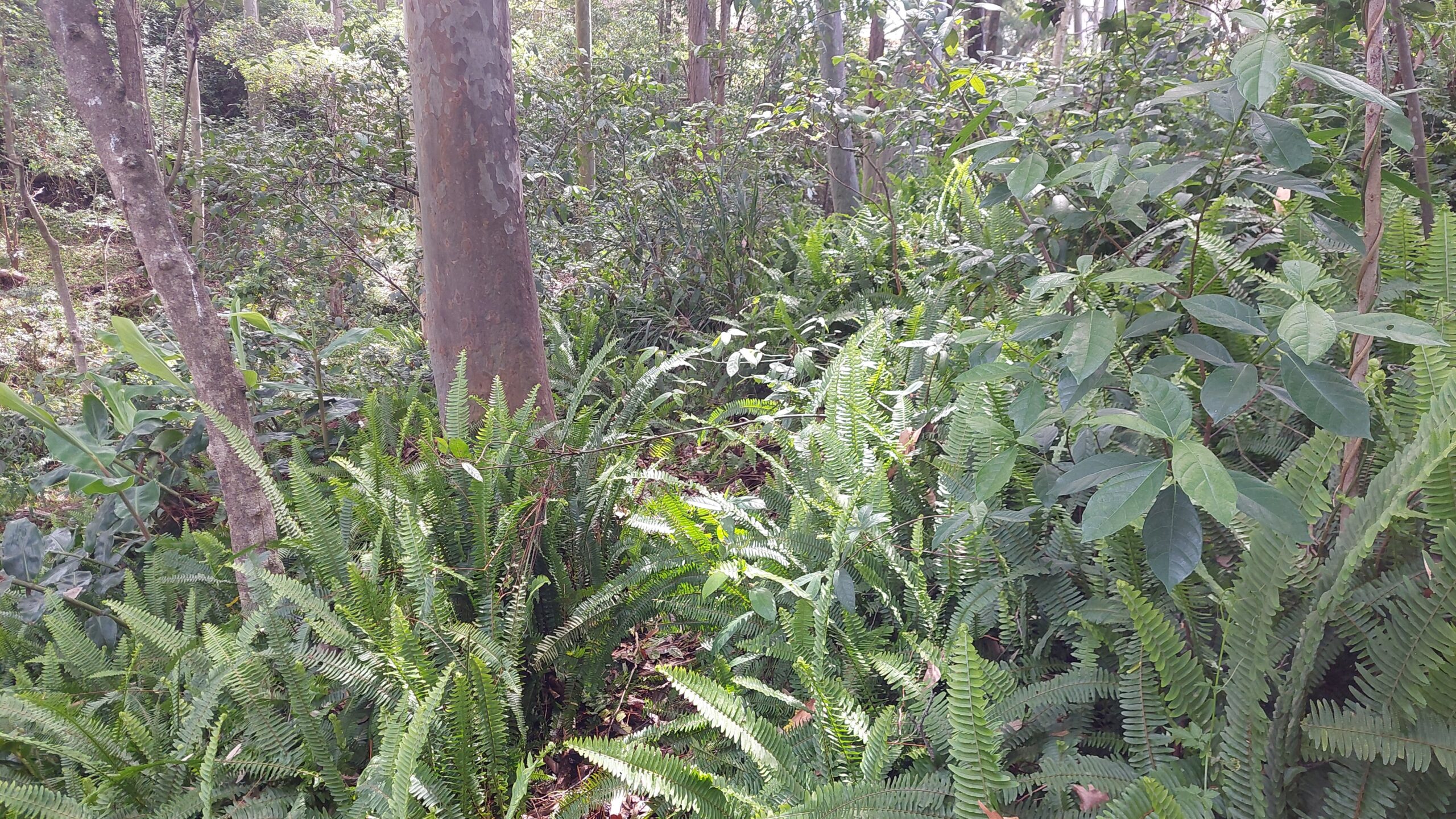
Site A is also in a bad way. Not much can grow here until the fishbone fern makes way…
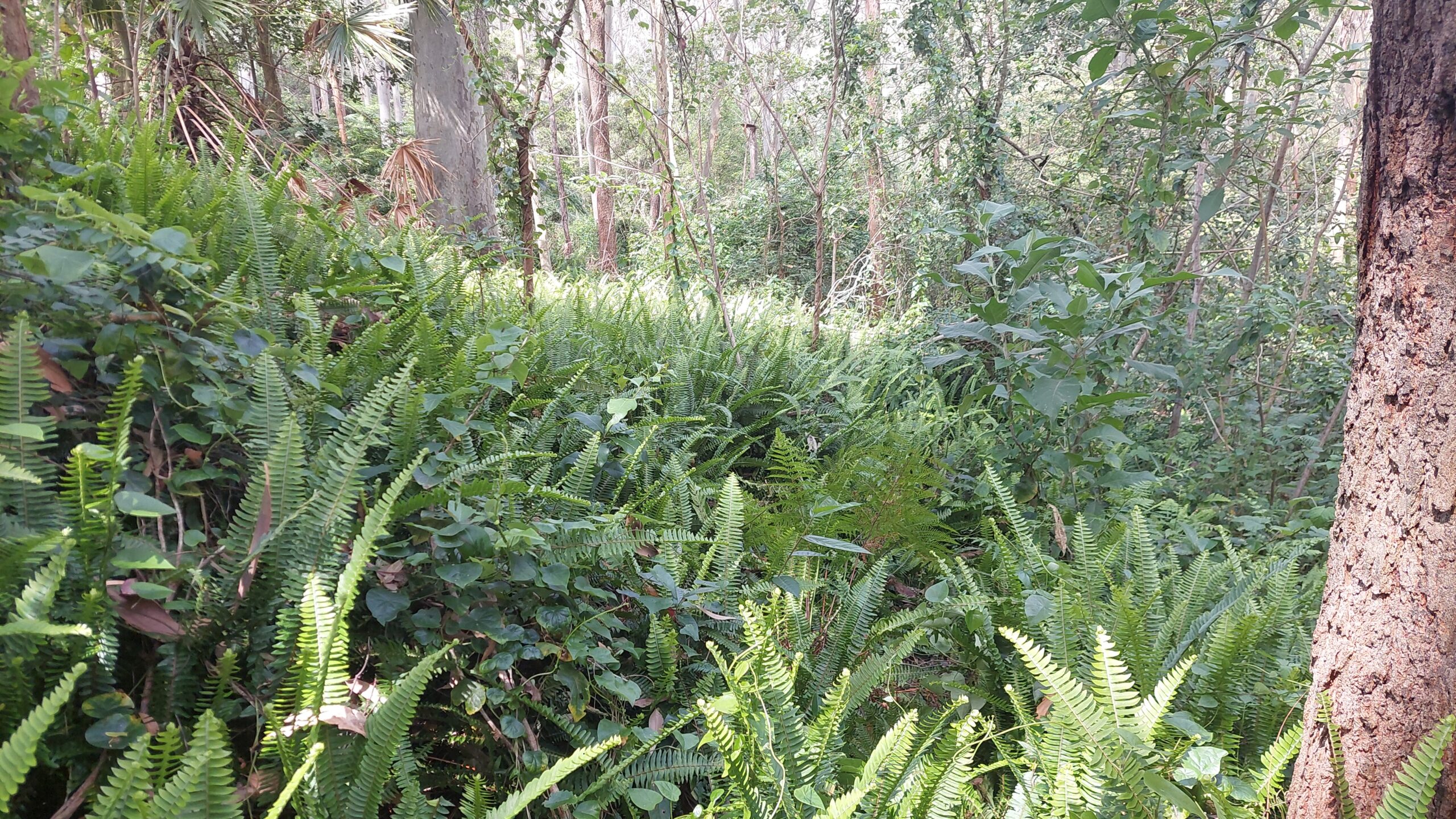
So much to do!